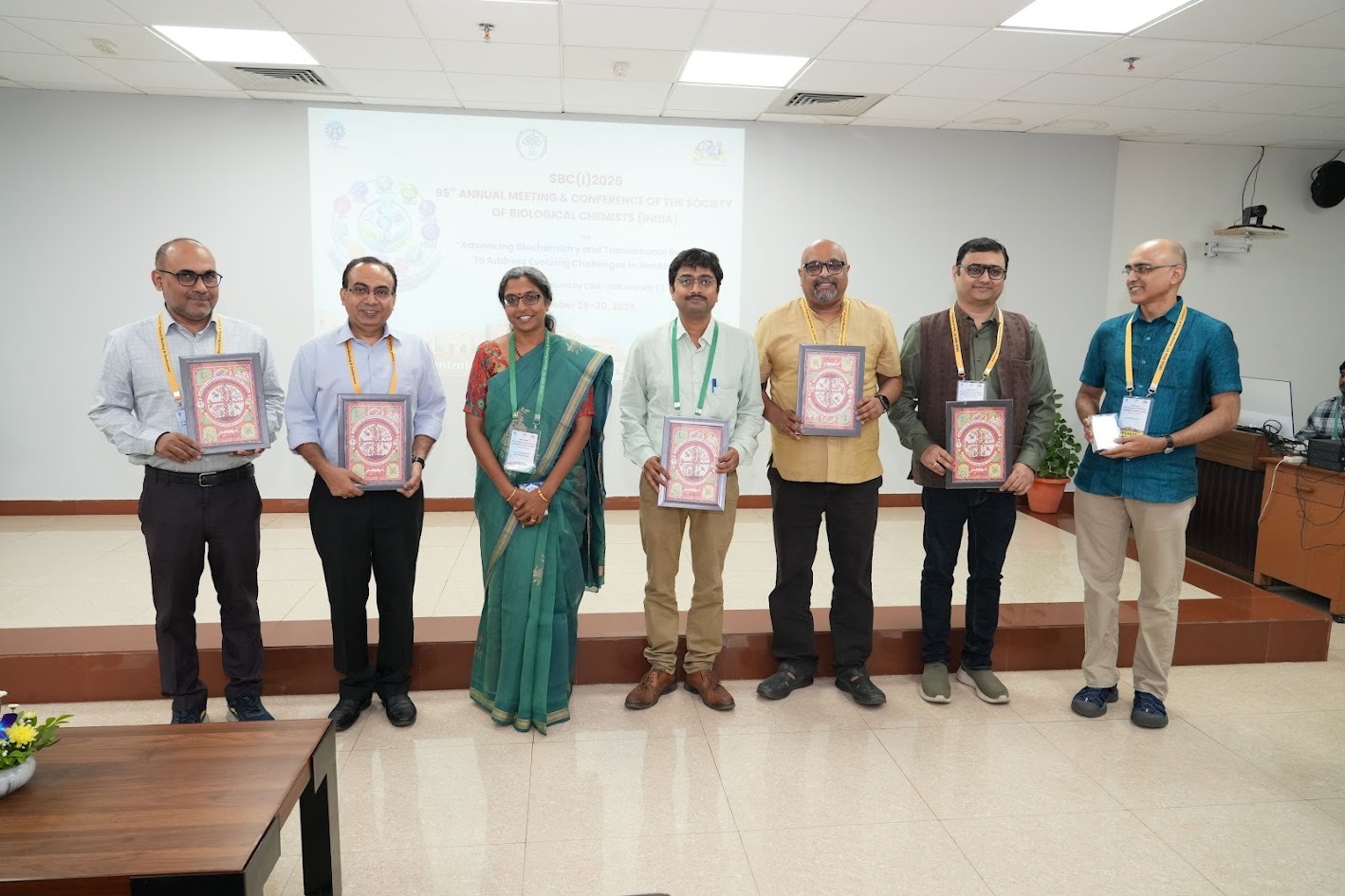
Second-day sessions explore microbiome interactions, malaria research, neurobiology, cancer screening and emerging areas of life sciences
Lucknow: The second day of the 95th Annual Meeting of the Society of Biological Chemists (India) [SBC(I)], being held at CSIR–Central Drug Research Institute (CSIR-CDRI), Lucknow, featured prestigious scientific awards, memorial lectures and discussions on emerging developments in biochemistry, molecular biology and biomedical research.
As part of the scientific programme, the Sreenivasaya Memorial Award was conferred on Dr Sunil Laxman from BRIC-InStem, recognition of his scientific contributions on “The Cellular Metabolic Economy.” The lecture highlighted the importance of cellular metabolism in understanding fundamental biological processes and their implications for biomedical research.
The Prof. A. N. Bhaduri Memorial Lecture Award was conferred on Dr Satish Mishra of CSIR-CDRI, who delivered a lecture focused on “Molecular Determinants of Plasmodium Development and Transmission,” highlighting research into the biological mechanisms underlying the development and transmission of malaria parasites. Such studies are important for advancing the understanding of parasite biology and identifying potential avenues for antimalarial interventions.
The day featured a series of scientific sessions covering diverse and interdisciplinary areas of contemporary life sciences, including The Microbiome and Its Interactions; Fungal and Parasite Biochemistry; Cell and Developmental Biology; Plant Biology and Defences; Neurobiology and Aging; Clinical Biochemistry; and Biomaterials and Tissue Engineering.


The discussions addressed a wide range of emerging research themes, including the vaginal and oral microbiomes, ulcerative colitis, antimalarial inhibitors, the gut microbiome in Alzheimer’s disease, and cervical cancer screening using an HPV genotyping panel. These presentations underscored the growing importance of interdisciplinary research in understanding disease mechanisms, developing improved diagnostic approaches and identifying potential therapeutic strategies.
The sessions also provided a platform for researchers to exchange scientific insights, share recent findings and discuss emerging challenges across fundamental and translational research. Flash talks were organised to provide researchers with an opportunity to present their work concisely, communicate key findings and engage with the wider scientific community.
The second day’s programme reflected the breadth of contemporary biochemical research, bringing together diverse scientific disciplines and highlighting the role of collaborative research in addressing challenges in human health, disease biology and biotechnology.












 https://www.youtube.com/watch?si=RtToJsBhYBatUrym&v=mOuYNSdhjHA&feature=youtu.be